I am General Anxiety Disorder, but my friends call me GAD. I come to visit you when you are young and stay with you over time, but I can also come from your genes. I run in families and grow with stress. I can be found in millions of adults, and I have a greater attraction to women. You can find me in the DSM under Anxiety Disorders. I am your difficulty breathing, swallowing, and focusing every minute of your life. I stay for six months or more and give you trouble coping with things. I am there when you can't relax. I am the twitch you can't get rid of. I am there when your muscles and your head aches. I am GAD.
Tuesday, April 24, 2012
Monday, April 16, 2012
I Salivate At The Sight Of Mittens. Is That Weird?
Sometimes I like taking personality tests, they can be fun. The Big Five Trait test was so not fun. There were so many questions and the results were so long too. I only skimmed the results and looked at my percentages for the sections which weren't even good. When I started taking the second test, I could not take it seriously..Do I like mannish children? Do I use shoe polish to excess? What is the stuff? After I answered the questions to the best of my ability, I was ready to get my results. They were scary right. I do not understand how those questions were relevant to anything at all about my personality. It was amusing to take and sweet to see my results. I liked the second test better.
Friday, March 9, 2012
Woops..Sorry Mom..I Forgot
This week, in psych, we learned about all kinds of memory. Iconic memory, echoic memory, short term memory, and long term memory. When you think about testing your memory, you think it's pretty easy and anyone can do it. However, if I asked you what you had for lunch yesterday, you probably would not be able to tell me. We use all kinds of memory every day. For example, remembering something someone said to you earlier would be echoic memory. Remembering someones ugly hairstyle you saw on the street would be iconic memory. I found a site on National Geographic Magazine online that tests your iconic short term memory. When I tried it, I thought it would be easy. As it turns out, it is far from it. Check it out.
Friday, March 2, 2012
Conditioning
This week in class we learned a lot about conditioning. Conditioning is training an animal to do something by giving their behaviors consequences. These could either be negative consequences or positive consequences, depending on if they did what the person wanted them to do. There are a lot of different ways to condition people too. One show I watch is The Big Bang Theory. In this show, Sheldon decides to try his own experiment and condition Leonard's girlfriend, Penny, by giving her a piece of chocolate every time she does something that he considers "good behavior". The kind of conditioning Sheldon is doing is called operant conditioning. Check it out:
Friday, February 24, 2012
Wait..What?
This week in class, we learned about optical illusions and why they work on our brains. After seeing all of the illusions from class, I remembered pictures I kept seeing on the internet. The pictures were the sidewalk drawings. Although there are various artists that do these drawings, one famous one is a man named Julian Beever. He is famous for his art on pavement in countries like England, France, Germany, USA, Australia and Belgium. His drawings are drawn completely deformed so you have to view it from the right angle to get the full 3D effect. For example, this image is being viewed from the right angle:
And this is the same image being viewed from the wrong angle:
A lot of these sidewalk images are really neat and are cool to see how they are made to make it 3D. Some of them I would be scared to walk over because I'd feel like I would fall in, like this one:
For more pictures like these, click here
Monday, February 20, 2012
PSA blog
My favorite video was Kayla, Leah, and Courtney's. Their video was really easy to hear and understand. Also, they had places in their video that other people didn't have in theirs. Their video was really informative and made everything in Ashwaubenon sound really nice. If people who didn't live in the area watched their video, they would be impressed with all of the things Ashwaubenon has to offer and possibly even move to Ashwaubenon, too.
Thursday, February 16, 2012
Fly Away Home
This week, we learned a lot about how infants develop through the lifespan. One thing the book talked about was imprinting. Imprinting is the process by which certain animals forma attachments during a critical period very early in life. One example the book gave was Konrad Lorenz who hatched ducklings do see what would happen if he was the first moving thing they saw once they hatched. The ducklings followed him around everywhere he went. This showed that although birds imprint the best with their own kind, they can also imprint to many moving objects like other animals or even a bouncing ball. While I was reading this section in the book, I remembered a movie I would watch with my grandma when I was five or six.
The movie was called "Fly Away Home" and it was about a girl who gets in a car accident with her mother. The mother died and the little girl, Amy, goes to live with her father who is an inventor in Canada. While living with her father, developers begin tearing up the local forest behind their house and Amy discovers an abandoned Canada Geese nest. Amy takes the eggs home with her and decides to care for them. Once they hatch, they act like Amy is their mother. They follow her everywhere and she feeds them and teaches them how to do things. After realizing what his daughter has done, he contacts the locals to ask for advice on what to do. He is told that the geese he has are fine right now, but they will want to try to migrate south for the winter. The problem with this is that they do not know how to fly. The father decides to invent a sort of hang glider that looks like a giant goose to fly it in front of the geese in hopes that they will learn from it and be able to fly south for the winter. The ending always makes me cry, but in a good way..
Wednesday, February 8, 2012
RealTalk: The Life of an Ice Addict
Being addicted to ice cubes for 48 hours was harder than most people, including myself, thought it was going to be. When this assignment was first handed out, I just thought I could get by without drinking anything at school. I didn't realize until after I started the exercise how much I actually drink things at school. I like to go to the drinking fountains a lot during classes, mostly just for something to do, but I could no longer do that! Even if I did have an ice cube to put into it while I drank, I was still under risk of someone else seeing. After, I would have had to take the ice cube back out of the fountain to erase my evidence which, let's face it, is really gross. Also, every day at lunch, I drink chocolate milk. Putting an ice cube in milk is risky business. There are so many people in the lunch room, and people I sit by did not have an addiction to ice. A while ago, I asked my friend, Taylor, to never let me leave the lunch line without getting milk because I will always regret it when I start eating my food. During the exercise, I decided not to get milk. When she insisted that I get milk while in the line, I had to keep telling her that I couldn't. I couldn't tell her why, I just kept saying that I was not getting milk. She insisted that I tell her why I was not getting milk and got a little upset when I told her I couldn't tell her why I wasn't getting the milk either. Even though school was rough on my addiction, home was a little easier. For a good portion of my time at home after school, I am alone. After school, I wanted a soda. I had to pour the soda into a class and add an ice cube, which was not a big deal at all. However, when the rest of my family got home from work, it was a little harder but still doable. Most of the time people stay out of the kitchen unless they are eating something. There was one incident with my mom when i needed to put an ice cube in my cup of water. I got it in without her noticing, but I must have looked really suspicious because she asked what was in my cup. I said, "nothing", but then she started accusing me of having other things in my cup. After I kept trying to tell her that there was really only water in my cup, she still wouldn't let me leave the kitchen without showing her my cup. It was easy to get the ice cubes in class where there were other ice addicts present. Devon brought a whole water bottle full of ice only to distribute, but for a price. I had to pay her one Starburst for every ice cube she gave me. It was tough, I really like Starbursts, but I guess that's the price I had to pay. It made me feel awkward when I had to lie to my family and I felt bad when I couldn't tell my friend the truth. But if it was a more serious addiction, I could understand how the person would feel really guilty lying to their friends and family about something so extreme. It is very easy to see how addictions can ruin perfectly good relationships. None of my actions really surprised me, but then again, it was just ice. I knew I had to try to keep it a secret, but when my mom found out she obviously didn't mind that I had ice in my cup. She was probably just glad it wasn't alcohol. I can see how some parents are surprised when they find out their child is using drugs because it is obviously something they teach them not to do. They probably blame themselves for their behavior and they should have seen the signs, hindsight bias. I think that friends would be more likely to notice a change in behavior because the person would not try to be as careful around their friends as they obviously would around their parents. I really enjoyed this exercise; I thought it was fun and insightful and it was also a good opportunity to teach our friends and parents what we are learning in class.
Monday, February 6, 2012
Millennial vs Gen X
Generations X:
These groups of learners like
interaction, activity, and multi-tasking.
They are non-linear and love multimedia.
You should consider using CDs, videos,
and computer-based training with
GenX. Try to use a multi-style level of
teaching and make it fun-filled learning.
The more you can relate what you do to
personal skill development and increased
personal marketability, the better.
This group is highly motivated and will
ask lots of questions and want interaction
Millennial:
They are difficult to intimidate and
free of fear. Failure does not frighten them.
This generation has the strongest
affinity to their World War II-era grand -
parents and great-grandparents. They
subscribe to a stricter moral code, care
about manners, and believe in civic action.
They will need more supervision and
structure than their Xer predecessors. They
will look for more attention and structure
from the authority figure.
Their preferred learning environment
combines personal challenge (like Xers),
teamwork (like boomers), and technology.
These groups of learners like
interaction, activity, and multi-tasking.
They are non-linear and love multimedia.
You should consider using CDs, videos,
and computer-based training with
GenX. Try to use a multi-style level of
teaching and make it fun-filled learning.
The more you can relate what you do to
personal skill development and increased
personal marketability, the better.
This group is highly motivated and will
ask lots of questions and want interaction
Millennial:
They are difficult to intimidate and
free of fear. Failure does not frighten them.
This generation has the strongest
affinity to their World War II-era grand -
parents and great-grandparents. They
subscribe to a stricter moral code, care
about manners, and believe in civic action.
They will need more supervision and
structure than their Xer predecessors. They
will look for more attention and structure
from the authority figure.
Their preferred learning environment
combines personal challenge (like Xers),
teamwork (like boomers), and technology.
Thursday, February 2, 2012
This week in class, we learned about the different parts of the brain. We learned about the different hemispheres and how some people can have split brain or even half of a brain. Parts like the brainstem, medulla, thalamus, amygdala, cerebellum, and all of the lobes and cortices are responsible for things like survival, breathing, balance, emotions, language,seeing, and touching. When I was little, I would watch a show called Pinky and The Brain. The show was about two genetically enhanced laboratory mice who lived in a cage in Acme Labs research facility. The Brain always made plans to take over the world which usually failed due to Pinky's stupidity. The show was funny but educational. After learning about the parts of the brain, I was reminded of The Brain Song from the show that is quiet catchy and could possibly help me and other students remember the parts of the brain. Enjoy!
Friday, January 27, 2012
Twin Experiments In World War II
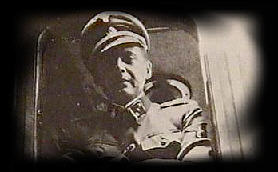
This week in class, we learned about unethical experiments that were performed in the past. Experiments that were don't on humans as well as animals. These unethical experiments are the reason for the standards we have now for the psychology tests that are done today. When each case was described in class, I was reminded of learning about World War II and the studies that were done by the Germans on twins. The man who was mostly responsible for conducting Hitlers twin experiments in World War II was a man named Josef Mengele, often referring to himself as 'Uncle Mengele'. He mainly worked in Auschwitz and ran horrible tests on the twins their. After the experiments were finished, he tended to murder the twins. If they weren't already dead.
Eva and Miriam
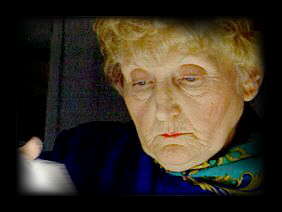
Some of the experiments he ran were: surgeries without anesthesia, blood transfusions between the twins, isolation endurance, reaction to various stimuli, injections with lethal germs, sex change operations, removing organs and limbs, injecting chemicals into their eyes to try to chance their eye color, and even sewing them back to back to try to make Siamese twins. A pair of twins that were forced to be experimented on in Auschwitz actually survived. Their names were Eva and Miriam Mozes. Their time at Auschwitz was very painful. They were put through many brutal surgeries and experiments. For example, Eva was given five injections. She developed a high fever and swollen arms and legs. When Mengele saw her the next morning, he stated she only had two weeks to live. Miraculously, Eva and Miriam survived Auschwitz long enough to be liberated. By that time, only a few individual twins were still alive. Eva and Miriam lived long into their elderly years, however they could never had children and died from a rare cancer brought on because their organs never fully developed due to the experiments from when they were children.
Eva and Miriam
Some of the experiments he ran were: surgeries without anesthesia, blood transfusions between the twins, isolation endurance, reaction to various stimuli, injections with lethal germs, sex change operations, removing organs and limbs, injecting chemicals into their eyes to try to chance their eye color, and even sewing them back to back to try to make Siamese twins. A pair of twins that were forced to be experimented on in Auschwitz actually survived. Their names were Eva and Miriam Mozes. Their time at Auschwitz was very painful. They were put through many brutal surgeries and experiments. For example, Eva was given five injections. She developed a high fever and swollen arms and legs. When Mengele saw her the next morning, he stated she only had two weeks to live. Miraculously, Eva and Miriam survived Auschwitz long enough to be liberated. By that time, only a few individual twins were still alive. Eva and Miriam lived long into their elderly years, however they could never had children and died from a rare cancer brought on because their organs never fully developed due to the experiments from when they were children.
Sunday, January 22, 2012
Chapter One
Blog 1:
I decided to take this class because i felt it would be a very interesting topic to learn about. I have high expectations for myself when it comes to this course. For example, I would like to earn a B or better as well as challenge myself and take the AP test at the end of the class. I am looking forward to learning about the reasons people may act the way they do towards themselves and others. Also, I am looking forward to learning about the different ways psychologists study behaviors and apply them everyone. I am most apprehensive about the amount of homework we will possibly be receiving. However, I do understand that this is a college course. The amount of homework and studying I will have to do will outweigh most of my other classes.
One thing the book introduces in the prologue is the debate between nature versus nurture. It is the age old debate that question if we are who we are based on our genetic code, or if it has something to do with the environment we have been exposed to growing up. There are many theories about this debate like: character and intelligence are inherited while ideas are inborn, there is nothing in the mind that did not come from the outside world through our senses, or the mind is a blank sheet on which experience writes. Although this book does not go into dept with this debate until later chapters, I still found it interesting and it reminded me of the story about the girls discovered to be raised by wolves.
Feral Children: The Story of Amala and Kamala
This story is a very intriguing story about nature versus nurture. These two girls named Amala and Kamala (eight and one and a half years old) were raised by a female wolf. They were discovered in the woods and taken to an orphanage in India. The two girls were said to have wolf-like qualities such as as walking on all fours with calluses on their hands and knees, eating raw meat, drinking with their tongues, and panting like wolves. They roamed around after midnight howling, moved with quick agility, and had better vision at night rather than during the daytime. After they were brought to the orphanage, they were very slowly coaxed into learning human like abilities like speaking some words, understanding colors, and drinking and eating from plates and glasses.
This is not the only time a child or children have been found in the wild with animal like qualities. I find these stories interesting because they really put the nature versus nurture theory to the test. Even though these girls were clearly human and had human DNA in them, the environment they grew up in had everything to do with their behavior and what they were taught. The fact that once they were taken away from their wolf environment and lifestyle they were able to start acting like a normal person proves that nurture plays a huge role in the way people are brought up. In these extreme cases, nurture is more dominate than nature, but in situations like human families with multiple siblings, the line between nature and nurture is harder to define.
I decided to take this class because i felt it would be a very interesting topic to learn about. I have high expectations for myself when it comes to this course. For example, I would like to earn a B or better as well as challenge myself and take the AP test at the end of the class. I am looking forward to learning about the reasons people may act the way they do towards themselves and others. Also, I am looking forward to learning about the different ways psychologists study behaviors and apply them everyone. I am most apprehensive about the amount of homework we will possibly be receiving. However, I do understand that this is a college course. The amount of homework and studying I will have to do will outweigh most of my other classes.
One thing the book introduces in the prologue is the debate between nature versus nurture. It is the age old debate that question if we are who we are based on our genetic code, or if it has something to do with the environment we have been exposed to growing up. There are many theories about this debate like: character and intelligence are inherited while ideas are inborn, there is nothing in the mind that did not come from the outside world through our senses, or the mind is a blank sheet on which experience writes. Although this book does not go into dept with this debate until later chapters, I still found it interesting and it reminded me of the story about the girls discovered to be raised by wolves.
Feral Children: The Story of Amala and Kamala
This story is a very intriguing story about nature versus nurture. These two girls named Amala and Kamala (eight and one and a half years old) were raised by a female wolf. They were discovered in the woods and taken to an orphanage in India. The two girls were said to have wolf-like qualities such as as walking on all fours with calluses on their hands and knees, eating raw meat, drinking with their tongues, and panting like wolves. They roamed around after midnight howling, moved with quick agility, and had better vision at night rather than during the daytime. After they were brought to the orphanage, they were very slowly coaxed into learning human like abilities like speaking some words, understanding colors, and drinking and eating from plates and glasses.
This is not the only time a child or children have been found in the wild with animal like qualities. I find these stories interesting because they really put the nature versus nurture theory to the test. Even though these girls were clearly human and had human DNA in them, the environment they grew up in had everything to do with their behavior and what they were taught. The fact that once they were taken away from their wolf environment and lifestyle they were able to start acting like a normal person proves that nurture plays a huge role in the way people are brought up. In these extreme cases, nurture is more dominate than nature, but in situations like human families with multiple siblings, the line between nature and nurture is harder to define.
Subscribe to:
Posts (Atom)