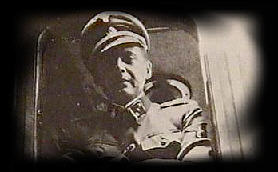
This week in class, we learned about unethical experiments that were performed in the past. Experiments that were don't on humans as well as animals. These unethical experiments are the reason for the standards we have now for the psychology tests that are done today. When each case was described in class, I was reminded of learning about World War II and the studies that were done by the Germans on twins. The man who was mostly responsible for conducting Hitlers twin experiments in World War II was a man named Josef Mengele, often referring to himself as 'Uncle Mengele'. He mainly worked in Auschwitz and ran horrible tests on the twins their. After the experiments were finished, he tended to murder the twins. If they weren't already dead.
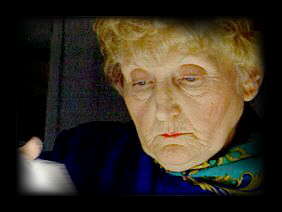
Eva and Miriam
Some of the experiments he ran were: surgeries without anesthesia, blood transfusions between the twins, isolation endurance, reaction to various stimuli, injections with lethal germs, sex change operations, removing organs and limbs, injecting chemicals into their eyes to try to chance their eye color, and even sewing them back to back to try to make Siamese twins. A pair of twins that were forced to be experimented on in Auschwitz actually survived. Their names were Eva and Miriam Mozes. Their time at Auschwitz was very painful. They were put through many brutal surgeries and experiments. For example, Eva was given five injections. She developed a high fever and swollen arms and legs. When Mengele saw her the next morning, he stated she only had two weeks to live. Miraculously, Eva and Miriam survived Auschwitz long enough to be liberated. By that time, only a few individual twins were still alive. Eva and Miriam lived long into their elderly years, however they could never had children and died from a rare cancer brought on because their organs never fully developed due to the experiments from when they were children.
Friday, January 27, 2012
Sunday, January 22, 2012
Chapter One
Blog 1:
I decided to take this class because i felt it would be a very interesting topic to learn about. I have high expectations for myself when it comes to this course. For example, I would like to earn a B or better as well as challenge myself and take the AP test at the end of the class. I am looking forward to learning about the reasons people may act the way they do towards themselves and others. Also, I am looking forward to learning about the different ways psychologists study behaviors and apply them everyone. I am most apprehensive about the amount of homework we will possibly be receiving. However, I do understand that this is a college course. The amount of homework and studying I will have to do will outweigh most of my other classes.
One thing the book introduces in the prologue is the debate between nature versus nurture. It is the age old debate that question if we are who we are based on our genetic code, or if it has something to do with the environment we have been exposed to growing up. There are many theories about this debate like: character and intelligence are inherited while ideas are inborn, there is nothing in the mind that did not come from the outside world through our senses, or the mind is a blank sheet on which experience writes. Although this book does not go into dept with this debate until later chapters, I still found it interesting and it reminded me of the story about the girls discovered to be raised by wolves.
Feral Children: The Story of Amala and Kamala
This story is a very intriguing story about nature versus nurture. These two girls named Amala and Kamala (eight and one and a half years old) were raised by a female wolf. They were discovered in the woods and taken to an orphanage in India. The two girls were said to have wolf-like qualities such as as walking on all fours with calluses on their hands and knees, eating raw meat, drinking with their tongues, and panting like wolves. They roamed around after midnight howling, moved with quick agility, and had better vision at night rather than during the daytime. After they were brought to the orphanage, they were very slowly coaxed into learning human like abilities like speaking some words, understanding colors, and drinking and eating from plates and glasses.
This is not the only time a child or children have been found in the wild with animal like qualities. I find these stories interesting because they really put the nature versus nurture theory to the test. Even though these girls were clearly human and had human DNA in them, the environment they grew up in had everything to do with their behavior and what they were taught. The fact that once they were taken away from their wolf environment and lifestyle they were able to start acting like a normal person proves that nurture plays a huge role in the way people are brought up. In these extreme cases, nurture is more dominate than nature, but in situations like human families with multiple siblings, the line between nature and nurture is harder to define.
I decided to take this class because i felt it would be a very interesting topic to learn about. I have high expectations for myself when it comes to this course. For example, I would like to earn a B or better as well as challenge myself and take the AP test at the end of the class. I am looking forward to learning about the reasons people may act the way they do towards themselves and others. Also, I am looking forward to learning about the different ways psychologists study behaviors and apply them everyone. I am most apprehensive about the amount of homework we will possibly be receiving. However, I do understand that this is a college course. The amount of homework and studying I will have to do will outweigh most of my other classes.
One thing the book introduces in the prologue is the debate between nature versus nurture. It is the age old debate that question if we are who we are based on our genetic code, or if it has something to do with the environment we have been exposed to growing up. There are many theories about this debate like: character and intelligence are inherited while ideas are inborn, there is nothing in the mind that did not come from the outside world through our senses, or the mind is a blank sheet on which experience writes. Although this book does not go into dept with this debate until later chapters, I still found it interesting and it reminded me of the story about the girls discovered to be raised by wolves.
Feral Children: The Story of Amala and Kamala
This story is a very intriguing story about nature versus nurture. These two girls named Amala and Kamala (eight and one and a half years old) were raised by a female wolf. They were discovered in the woods and taken to an orphanage in India. The two girls were said to have wolf-like qualities such as as walking on all fours with calluses on their hands and knees, eating raw meat, drinking with their tongues, and panting like wolves. They roamed around after midnight howling, moved with quick agility, and had better vision at night rather than during the daytime. After they were brought to the orphanage, they were very slowly coaxed into learning human like abilities like speaking some words, understanding colors, and drinking and eating from plates and glasses.
This is not the only time a child or children have been found in the wild with animal like qualities. I find these stories interesting because they really put the nature versus nurture theory to the test. Even though these girls were clearly human and had human DNA in them, the environment they grew up in had everything to do with their behavior and what they were taught. The fact that once they were taken away from their wolf environment and lifestyle they were able to start acting like a normal person proves that nurture plays a huge role in the way people are brought up. In these extreme cases, nurture is more dominate than nature, but in situations like human families with multiple siblings, the line between nature and nurture is harder to define.
Subscribe to:
Posts (Atom)